By embracing new challenges, VERSEDAY is working toward a future in which creative work can thrive for years to come. Drawing on subjects ranging from painting to science, the company develops original content through its distinctive interpretations of artists’ philosophies and intellectual property (IP). Rather than relying on flashes of inspiration, the team prioritizes in-depth research into each subject, establishing itself as a collective of art producers.
There is no definitive answer to how we can keep doing what we love for the long term. For VERSEDAY, finding that answer means working at it every day. Through its experiments and challenges, the company hopes to become a role model for the next generation—proof that a lasting career in the arts is possible—and eventually to “graduate” with a sense of fulfillment.
We spoke with CEO Daedong Zo and Producer Sinmu Lee about VERSEDAY’s journey so far and the future they hope to create.
Q1. Could you tell our readers how VERSEDAY began and what kind of company it is?
Daedong Zo: We began as a team of professionals who had spent many years working in CG for films. Our individual backgrounds vary, but most of us studied art. After working at a film visual effects company for a long time, a group of us came together around the idea of developing a more specialized practice in this field. We established a division there and eventually became independent, wanting to work with a clearer sense of our own identity. That became the company we are today. It has been about four years since we started.
When people ask what kind of company we are, we usually prefer to show them rather than explain it in words. As you can see on the VERSEDAY website, we are both a creative planning and production company, developing new content from a wide range of artistic IP.
Sinmu Lee: Let me add a perspective as someone who has known Daedong for 20 years—as a colleague, a friend, and someone who has watched his work closely. The market is always looking for new work, new experiences, and new artists. But every production company has its limits, whether in creative development, execution, or other areas. What makes VERSEDAY interesting is that it has opened itself up beyond those limits.
Simply put, the company takes the work and philosophies of artists in fields such as dance, illustration, and architecture, translates them into moving images with its own sensibility, and brings them to the market and to audiences. Look through its portfolio and you will see a remarkable range of tones, styles, and visual languages. Having worked in moving-image production for many years myself, I see enormous potential in VERSEDAY. I wonder whether a production company has ever attempted quite this approach before.
Daedong Zo: Someone who saw our company once told me they could not see how it differed from the CG company where I used to work. It was the largest CG company in Korea, and to that person, all our projects simply looked like CG. Of course, we do work with CG. But we have a much greater ownership stake in what we create. We produce the work ourselves and retain a share of the rights. The biggest difference is that we are a company that creates work of our own.
As Sinmu mentioned, we also collaborate with artists across disciplines. We begin by understanding and respecting their work, philosophies, and artistic worlds, then expand them into new content and experiences. We interpret their work in our own way, translate it into moving images, and sometimes sell that content to corporate clients. We create new sources of income for artists and build a structure in which that revenue can flow back into their creative practice. At the same time, through planning and production, we create new value in areas that were previously accessible only through CG companies. That is what VERSEDAY does.
Q2-1. When reinterpreting artists’ “VERSE” as new content, is there a collaborative process you consistently follow, or a new approach you are considering?
Daedong Zo: All our collaborations begin with research. We do not necessarily follow a fixed market research process or template. Instead, we first take the time to study and thoroughly understand the space, artist, or work at the heart of a project.
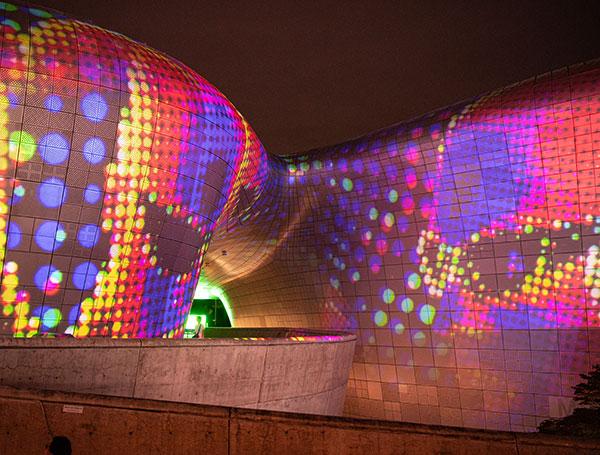
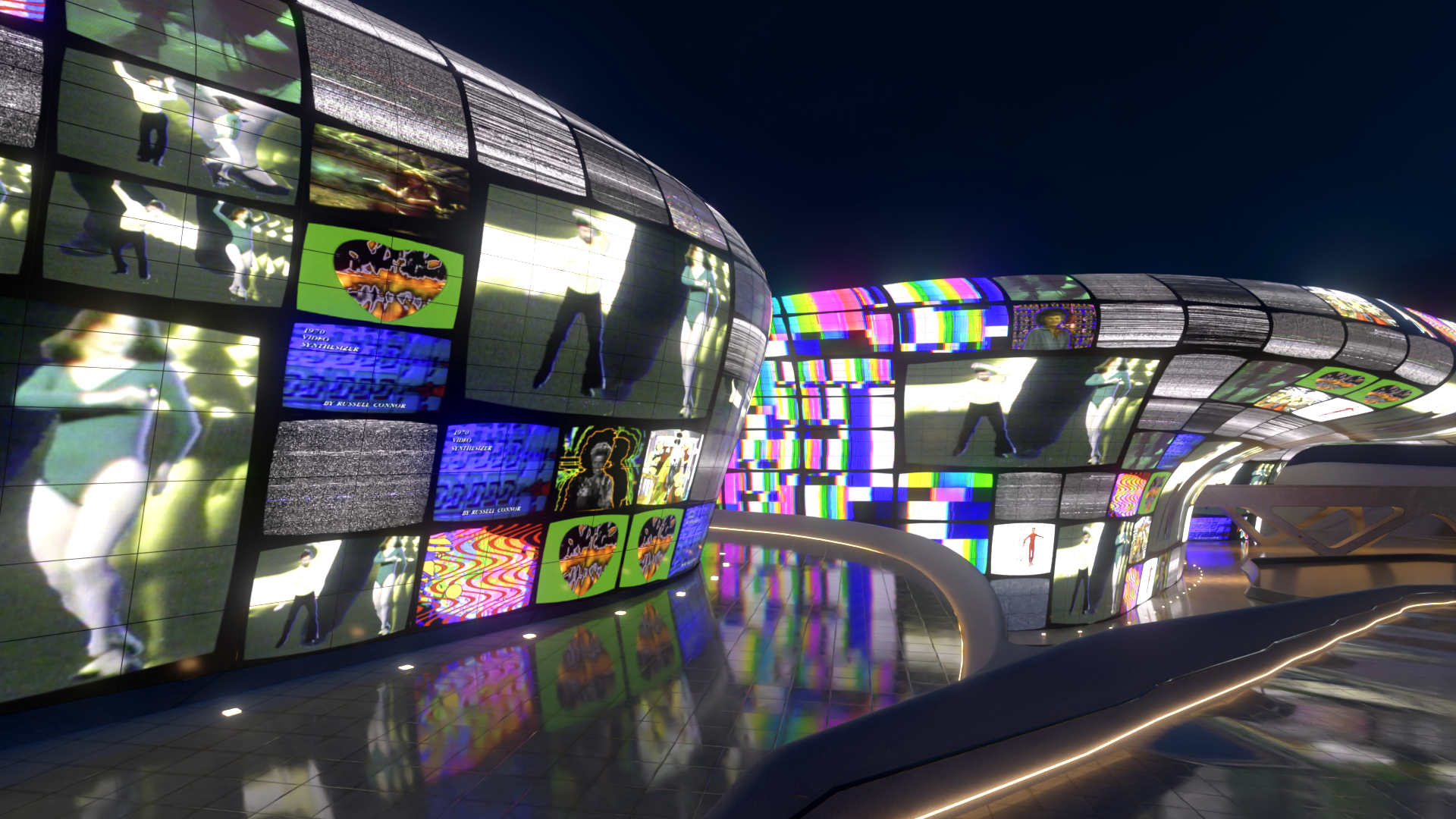
For example, our initial proposal for Seoul Light DDP centered on Nam June Paik. During a chance conversation with a museum director, I learned things about Paik that went beyond what I had studied at school. His video synthesizer caught my attention. As I researched it, I began to think that an approach inspired by it could make an interesting proposal for Seoul Light. Before writing the proposal, we studied Paik and explored the context of Global Groove in depth, alongside his work with the video synthesizer. That research became the foundation for a new concept.
Q2-2. Does that mean you identify compelling elements in an artist’s work and then develop them visually?
Daedong Zo: Our approach is similar to a singer rearranging an existing song and performing it in their own style. In our case, we interpret an artist’s philosophy through moving images and visual language rather than music. So, rather than turning a sudden idea into a video, we spend a considerable amount of time studying. We focus on how we can absorb what we have learned and express it in a way that makes people want to listen more closely to what we have to say.
For our project at the Gwacheon National Science Museum, we wanted to overcome a particular challenge: however entertaining we made it, we could still end up with something you might find in any science museum. Working with astrophysics professors at Seoul National University, we reinterpreted the scientific concept of light through a story about a young Einstein and time. Light has traveled from the distant past to reach us in the present. The story begins with a young Einstein wondering about light and follows his journey as he starts to unravel its properties, one by one. We created a story about something that has always been beside us. When we draw on someone else’s expertise and bring our own interpretation to it, the result tends to be a little different.
We have also brought Sunwoo Kim’s two-dimensional dodo characters into three-dimensional narratives. During the pandemic, we collaborated with Joguman Studio to create and donate 3D video content for a media wall in the children’s ward at Seoul National University Hospital. The theme was travel—something the children particularly longed for. Projects like these are also one way we introduce ourselves and our work to the world.
Sinmu Lee: I think it has to begin with respect for the original creators’ work. We build a shared understanding of how they see their own IP, then use VERSEDAY’s abilities to develop it into something new. That is probably the simplest way to describe our process.
Q3. Choosing the right collaborators must also be important when securing IP rights. What matters most when selecting a partner—for example, their profile or how readily their work can be adapted into new content?
Daedong Zo: There is no fixed set of criteria or single route for choosing collaborators. It varies considerably from project to project. Rather than following one formula, we respond to the circumstances and context.
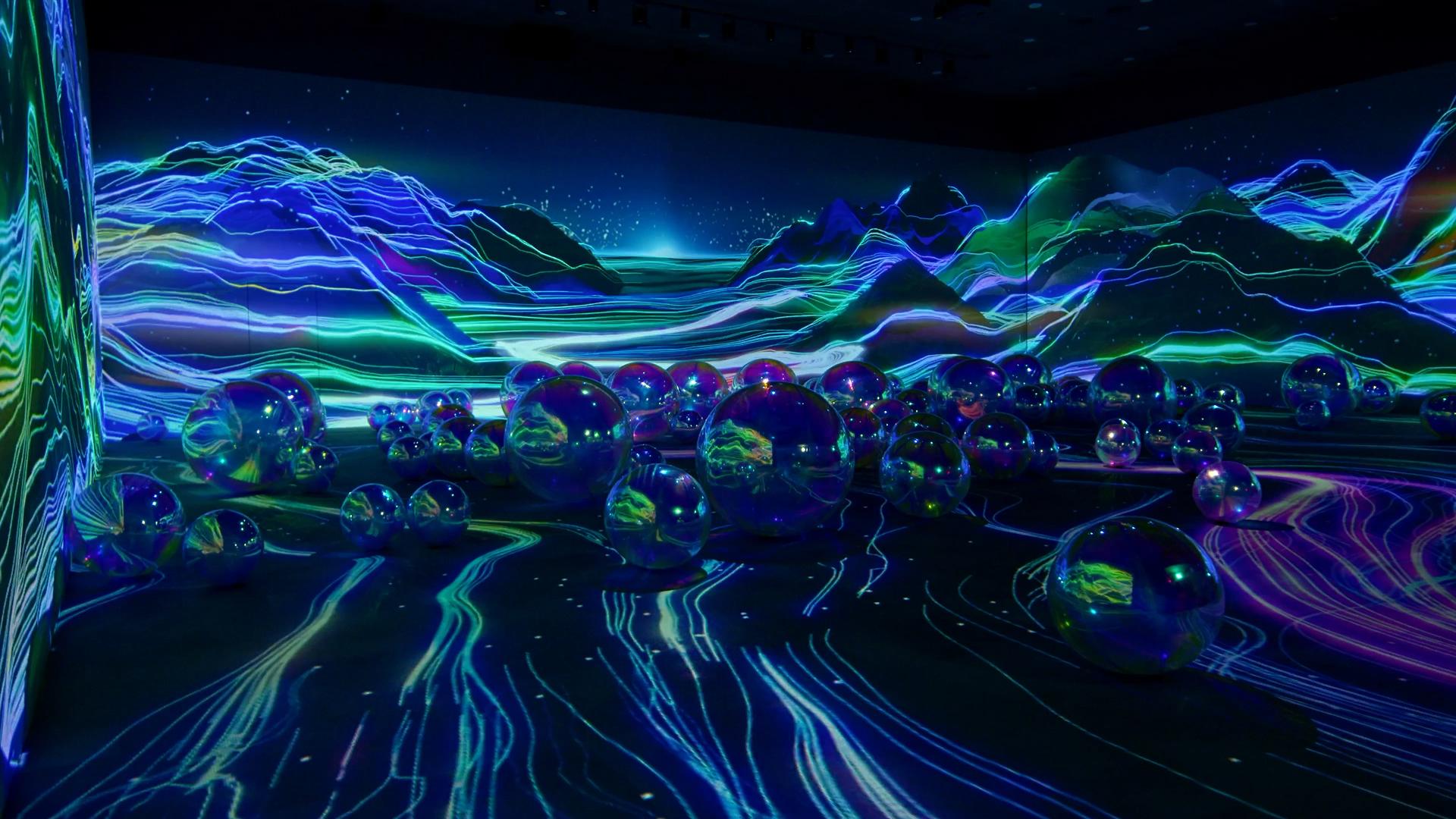
For example, LG once approached us with a request to digitize KIM Whanki’s work for an exhibition at Frieze Seoul. In another instance, we took the initiative and proposed to the Seoul Design Foundation that his work should be presented on a larger scale, in a space like DDP. There have also been cases where a museum subsequently contacted us about content we had produced, leading to ticketed exhibitions and acquisitions.
Sometimes a project begins with inspiration from a chance conversation. While speaking with a museum director and curator, I had the opportunity to try Nam June Paik’s video synthesizer and hear about Global Groove. That led me to think about how these ideas might connect with live, real-time performances by musicians working today. From there, we kept looking for artists who would be a good fit.
Of course, we also take on commercial projects with clearly defined briefs. Our Shinsegae Department Store project, which combined pianist Seong-Jin Cho’s performance with a spring theme, was one example: we received the brief, proposed a concept, and produced the work. Ultimately, what matters most to us is that a single artistic IP can grow beyond a one-off project, taking on new value as it expands into different spaces and formats.
Sinmu Lee: Fundamentally, I think artists enjoy seeing their work become more widely known and presented in different ways. We add an approach they may not have considered themselves, bringing earlier work into a contemporary context or introducing it to the market and the public in a new form. Artists often respond with real excitement: “You’ve reinterpreted my work like this?”
Q4. What have been your most rewarding moments at VERSEDAY, and your greatest challenges? How have those experiences shaped the company?
Daedong Zo: The most rewarding moment is when a project we have poured all our energy and hard work into comes to a successful close without a hitch. [Laughs.] That feeling at the end of all the effort is probably what has kept us going.
Our biggest challenge, on the other hand, has always been making the company sustainable. After many years in the CG industry, I came to understand that the ability to create good content matters, but so does having a structure that allows you to keep doing it. There is no established formula for success. We are finding an approach that works for us by reaching audiences in different spaces and formats, beyond cinemas alone.
One of the hardest things has been the absence of a role model among those who came before us. So, rather than point to a particular turning point in our growth, I would say we are planting seeds of possibility in every direction, hoping to become that role model for the next generation. We never know when a seed might sprout or eventually grow into a tree. That is why planting as many as we can feels important. This is the process we are going through now: trying different things, continuing to learn, and persevering.
Q5. For people preparing to enter the arts through artistic IP development or content production, what should they understand about the work, and what skills do they need?
Daedong Zo: Rather than being the “singer” on stage ourselves, we enjoy finding talented people and producing their work in a direction we want to explore—or perhaps an entirely different one. If you are interested in content production or creative planning, I think the starting point is to study a wide range of references. Research is fundamental to a producer’s role.
I also believe this work requires a slightly different perspective from that of an artist. An artist expresses their own story. Someone creating content from artistic IP first needs to understand the artist’s intentions, then interpret and communicate them in a new way. Practicing how to understand someone else’s intentions and develop a fresh interpretation is therefore just as important as learning to express your own ideas. Of course, you need to put forward ideas and interpretations of your own. But it is not enough simply to insist on your point of view. You must be able to explain why you have interpreted something in a particular way and why you want to take it in that direction—and persuade others of your reasoning.
I also think we have a responsibility for how our content communicates with audiences. The work does not end with making what you want to express. You need to consider how audiences will receive and experience it. Ultimately, three things matter in this field: the ability to understand a work, the ability to make a convincing case for your interpretation, and consideration for the people who will experience it.
Q6. VERSEDAY has been expanding artistic IP across painting, music, and other fields into new content and spatial experiences. How would you like the company to be remembered?
Daedong Zo: More than anything, we want to be remembered as a company that set an example of how this work can be sustained. As I mentioned earlier, we did not have a person or company in the industry that we could look to as a role model. We want to demonstrate that there is a path on which a company can endure and art and business can both thrive. If the next generation can say, “I want to be like that person,” or “I want to work at that company,” and pursue those ambitions without facing the same uncertainty we did, that would be the ultimate achievement.
We are also a team with a long history together—almost a family. Sinmu and I have known each other for more than 20 years. The first junior colleague I supervised is now a director at the company, and the first junior colleague he supervised is now a team leader. Even during uncertain times like the pandemic, the team was a constant. They are family, so changing the team was not a decision I could take lightly. When I look at these dependable people who have put their trust in me, I feel a responsibility to make sure we bring in what we need every month.
That concern also played a part in bringing Sinmu into the company. Whenever I felt anxious about our direction or worried that we might be heading toward a cliff, I would visit him at the company where he was working and ask for advice. Then one day, perhaps out of frustration, he opened his laptop and gave me a carefully prepared presentation on VERSEDAY’s strengths, its value, and the direction it should take. [Laughs.] I was deeply moved by the thought and sincerity behind it. After a great deal of persistent persuasion, I finally convinced him to join us. Now we are finding our way together.
At the time, he told me, “This will be the last company I work for. This is where I’ll retire.” That made me think that I, too, would like to finish what I set out to do here, build a foundation for the next generation, and reach the finish line with a sense of fulfillment—to “graduate.”
Sinmu Lee: “Graduation” is an interesting word, isn’t it? It really struck me when I first heard it. Unlike retirement, graduation suggests a structure in which the founding members can fulfill their roles and move on, while those who follow advance into their second and third years, carrying forward a healthy organizational legacy. It means there will be someone to sustain that legacy and take good care of it. That is what makes the word so beautiful to me.
Daedong Zo: Exactly. That is what I hope we can do. We are working toward being able to graduate together with peace of mind. There are still many challenges to resolve, but creating new possibilities ourselves is exciting. We also hope our efforts might become a useful precedent for those who come after us. Above all, we have colleagues we can rely on. With that trust in one another, we are taking one step at a time toward our “graduation.”
Q7. Is there anything else you would like to share?
Daedong Zo: Above all, there is something I want to say to younger people studying art. I hope they will look beyond what they learn at school and from their professors and think much more seriously and practically about how they can sustain the artistic work they are doing now. Whether or not you have considered that question can make an enormous difference when you first enter the working world.
When we received the first draft of the interview questions, I wondered whether we were expected to say something grand about media art or art in general. But I felt it was more important to speak honestly about our reality and the questions we are facing. One reason VERSEDAY is difficult to define is that we are constantly adjusting our direction. Who we are today may be different from who we are tomorrow.
“As we continue searching for answers, we will keep planting the seeds of diverse and exciting experiments. We hope you will follow VERSEDAY’s journey and support us along the way.”
Sinmu Lee: What I really like about where we are now is that we keep thinking, experimenting, and remaining open to new possibilities. As we meet artists from different disciplines and expand what we can do, we discover new directions. I want to keep exploring those possibilities together.
“We hope you will look forward to the many different challenges VERSEDAY takes on as we continue moving toward new possibilities.”